TheCoffee Table Book
The world's most interesting stories about the substances that change the mind — culture, science, history, and the art of staying alive.
Open the book ↓Foreword
You are already a drug user.
This is, after all, a coffee table book — and caffeine is the most widely used psychoactive drug on Earth. Ninety percent of the world's adults take it daily. It is a mild stimulant of the central nervous system; it has a lethal dose; it produces dependence and withdrawal. We simply decided, collectively, that it was civilization rather than vice.
That decision — what counts as a sacrament, a medicine, a vice, or a crime — is rarely about pharmacology. It is about history, money, race, religion, and fear. This book takes the whole sprawling subject seriously: as anthropology, as chemistry, as art, and as a public-health problem we have mostly handled badly.
What this book is not is a manual for getting high. You will find no recipes, no doses, no instructions for combining anything. What you will find is the opposite of the thing prohibition pretends to offer and never delivers: honest information, the kind that keeps people alive.
The premise
Tell people the truth, and fewer of them die.
This is the founding insight of harm reduction — the public-health philosophy behind organizations like DanceSafe. It does not require approval of drug use. It requires only the admission that people use drugs regardless of the law, and that a society can choose whether they do so informed or in the dark.
A coffee table book is designed to be opened idly, by anyone, in a living room. That is exactly the right place for this conversation to finally be had out loud.
Chapter I
A Brief History of Getting Out of One's Head
Every human culture ever studied has found a chemical way to alter consciousness — for medicine, for the divine, for grief, for joy. The drug war is roughly a century old. The relationship is at least forty thousand years.
The first gardens were pharmacies
Opium poppies, ephedra, and cannabis appear in the earliest agricultural record. Neolithic burials include the tools of the intoxicant.
Soma & the Vedas
The Rigveda devotes a whole book to soma, a pressed plant-drink described as a god itself — the sacrament at the root of an entire religion.
The Eleusinian Mysteries
For two millennia, initiates at Eleusis drank the kykeon and were sworn to secrecy. Plato, Aristotle, and Cicero went. Many scholars suspect an ergot-derived visionary brew.
Coffee & the qahveh khaneh
Sufi monks in Yemen brew coffee to stay awake for prayer. The coffeehouse becomes the engine of the Enlightenment — and is banned, repeatedly, as too dangerous to public order.
Empire runs on drugs
Britain fights two wars to keep selling opium to China. Sugar, tobacco, tea, and coffee — all psychoactive trades — finance the colonial world.
Hofmann's bicycle
Albert Hofmann synthesizes LSD, shelves it, then accidentally absorbs it five years later — and takes the most famous bicycle ride in chemistry home through Basel.
The War is declared
Nixon names drugs "public enemy number one." An aide later admits the policy was built to target the antiwar left and Black communities by criminalizing what they used.
The renaissance
Portugal decriminalizes and overdose deaths fall. Johns Hopkins and NYU reopen psychedelic labs. MDMA and psilocybin enter Phase III trials for trauma and depression.
Chapter II · Plate Section
The Molecules
Every one of these is a few dozen atoms. The structures below are scientific icons — the same diagrams in any pharmacology textbook — presented here as what they are: some of the most consequential small drawings of the twentieth century.
Caffeine · the one in your cup
Serotonin (5-HT) · the receptor everything talks to
Δ⁹-THC · isolated by Mechoulam, 1964
Set, setting, substance
The pioneering psychiatrist Norman Zinberg argued that a drug's effect is never the molecule alone. It is three things at once: the drug, the set (who you are, your mindset that day), and the setting (where you are, who you're with, whether you're safe). The same dose can be ecstasy or terror depending on the other two. This is why context, not just chemistry, is the heart of both ritual and harm reduction.
In brief — how they work
Most of these molecules are shaped like the brain's own messengers and slot into the same receptors. Classic psychedelics fit the serotonin 2A receptor. Opioids mimic endorphins. Stimulants flood the synapse with dopamine. The drug doesn't add a new signal so much as borrow an existing one — which is exactly why the body, over time, pushes back.
The Index of Molecules
Every psychoactive in this book is just a few dozen atoms arranged in space. Here is the whole cabinet — accurate skeletal structures, drawn straight from public chemical data.
Chapter III
A Cultural Field Guide
Seven families, told as culture and risk — not as instruction. No doses appear on these pages by design. What appears instead is what each one has meant to people, and what it can cost them.
The Mystics
Psilocybin, LSD, mescaline, DMT. Ancient sacraments and the engine of the current clinical renaissance. Physiologically among the least toxic drugs known — the real risks are psychological and situational.
Watch: overwhelming experiences; latent psychosis; never with an unscreened heart or mind.
The Heart-Openers
MDMA. Born in a lab in 1912, reborn as a tool for couples therapists, then the dancefloor. Now in Phase III trials for PTSD under the MAPS banner.
Watch: overheating, water balance, and adulteration. The DanceSafe ethos was practically invented for this molecule.
The Old Companion
Used for at least 5,000 years; possibly hidden in the Hebrew Bible (see Chapter IV). Now legal for most Americans in some form.
Watch: adolescent brains, dependence, and potency creep in modern concentrates.
The Distance
Ketamine, nitrous, DXM. Ketamine is now a frontline, fast-acting antidepressant — and a club drug — depending entirely on set and setting.
Watch: bladder damage with heavy use; dangerous in the wrong physical environment.
The Accelerators
Cocaine, amphetamine, caffeine. The drugs of work and ambition as much as nightlife. The legal ones run the global economy.
Watch: the cardiovascular system, sleep, compulsion, and the brutal comedown.
The Tide
From the poppy to fentanyl. The oldest medicine for pain and the center of the deadliest drug crisis in modern history.
Watch: respiratory depression. Naloxone reverses overdose. Fentanyl contamination is now everywhere — see Chapter V.
A note on what's missing. We deliberately omit dosages, routes, and combinations. A field guide tells you what a thing is and what it can do to you — it is not a set of instructions. If you are facing a real decision about your own or someone else's use, the resources in Chapter V connect you to people trained to help.
Chapter IV
Kaneh Bosm
קְנֵה־בֹשֶׂם
A surprising amount of what the modern world knows about these molecules runs through Jewish scientists, thinkers, and a 3,000-year-old argument about what may enter the body and the soul.
The verse in question
"Take the finest spices: of kaneh bosm two hundred and fifty…"
— Exodus 30:23, the recipe for the holy anointing oil. The anthropologist Sula Benet argued in 1936 that kaneh bosm is cannabis, mistranslated for centuries as "calamus." The reading is debated — but it has never been put to rest.
The father of the field
Raphael Mechoulam, of the Hebrew University of Jerusalem, isolated THC in 1964 and went on to discover the body's own endocannabinoid system — naming its key molecule anandamide, from the Sanskrit ananda, "bliss." Nearly everything science knows about cannabis begins with him.
The chemist & the therapist
Alexander "Sasha" Shulgin reintroduced MDMA to psychotherapy in the 1970s, and Rick Doblin — founder of MAPS — has spent forty years bringing it through the FDA, explicitly framing the work as healing trauma and, in his words, reducing the conditions that produce another Holocaust.
The law of the living
Pikuach nefesh — the saving of a life — overrides nearly every other commandment in Jewish law. It is the principle under which rabbinic authorities have approved medical cannabis, and the same logic, secularized, underwrites all of harm reduction: keeping a person alive comes first.
From the visionary states of the Kabbalists to the disproportionate presence of Jewish researchers in psychedelic medicine, the thread connecting Judaism and the altered mind is real, documented, and almost entirely untold to a general audience. It is one of the reasons this book exists.
Chapter V · The DanceSafe Core
First, Do Less Harm
This is the chapter that earns the book its right to exist. It contains no encouragement and no instruction — only the small number of facts that, repeated often enough, keep people from dying. This is the work DanceSafe has done at festivals and clubs since 1998.
The "what not to combine" chart
The single most dangerous thing in drug use is usually not one substance — it's two. This chart exists to be read as a list of things to avoid. Modeled on DanceSafe's published combination guidance.
| Opioids | Alcohol | Benzos | Stimulants | MDMA | Psychedelics | |
|---|---|---|---|---|---|---|
| Opioids | — | ✕ | ✕ | ! | ! | ○ |
| Alcohol | ✕ | — | ✕ | ▲ | ▲ | ▲ |
| Benzos | ✕ | ✕ | — | ! | ! | ○ |
| Stimulants | ! | ▲ | ! | — | ▲ | ! |
| MDMA | ! | ▲ | ! | ▲ | — | ! |
| Psychedelics | ○ | ▲ | ○ | ! | ! | — |
Simplified for illustration. The fatal cells are the ones that matter most: any two depressants together — opioids, alcohol, benzodiazepines — multiply the risk of your breathing simply stopping. This is how most accidental deaths happen.
- Test it. You cannot see fentanyl, and it is in everything now. Fentanyl test strips and reagent kits — DanceSafe's original mission — are cheap, legal in most places, and save lives.
- Never mix depressants. Alcohol + opioids + benzos is the deadliest equation in this book.
- Never use alone. Someone sober and present is the difference between an overdose and a death. The Never Use Alone hotline (US: 1-800-484-3731) will stay on the line.
- Carry naloxone. It reverses an opioid overdose in minutes and is now available without a prescription. It cannot hurt someone who doesn't need it.
- Start low, wait. The most common error is redosing before the first dose has peaked.
- Mind set & setting. Safe place, trusted people, sound state of mind. Chapter II was not decoration.
- Know the emergency signs. Blue lips, can't be woken, slow or no breathing → call emergency services. Good Samaritan laws protect you.
Chapter V · The Substance Reference
Know Before
Harm reduction means reducing risk — not learning how to use. There are no doses on these pages. There are the risks, the combinations that can kill you, and the aftercare some people follow under a clinician's guidance.
Screen yourself first
Heart conditions and a personal or family history of psychosis are genuine contraindications for much of this list. Honesty with yourself is the first safety step.
The silent killer is combinations
Most deaths involve two substances, not one. MAOIs and mixing depressants are the two dangers that recur on every card below.
Test · sit · start low
Reagent and fentanyl testing, a sober trusted sitter, a safe setting, and never redosing on impulse. The basics save the most lives.
MDMA
EmpathogenThe heart-opener — behind both the PTSD trials and the dancefloor.
- Risks
- Overheating (the usual cause of death), drinking too much water (hyponatremia), serotonin depletion, cardiac strain, adulteration.
- Never mix
- MAOIs — can be fatal. Other stimulants or serotonergic drugs.
- Aftercare
- Magnesium eases jaw tension; antioxidants help. Some take 5-HTP the following day(s) to replenish serotonin — never alongside the MDMA itself (serotonin-syndrome risk). Space sessions months apart.
Ketamine
DissociativeAnesthetic, fast antidepressant, and club drug — set and setting decide which.
- Risks
- Incapacitation — falls, drowning, vulnerability. Bladder & urinary damage with frequent use. Dependence.
- Never mix
- Other depressants — alcohol, benzodiazepines, opioids. Breathing can stop.
- Aftercare
- Protect the bladder: limit frequency, stay hydrated, see a doctor for any urinary symptoms. (Some users supplement B-vitamins; the evidence is limited — ask a clinician.)
2C-B
Psychedelic · phenethylamineA colorful, body-loaded psychedelic — famously sensitive to small differences.
- Risks
- Strongly dose-dependent, so less is more; nausea; anxiety. Frequently mis-sold as something else.
- Never mix
- MAOIs; stimulants.
- Aftercare
- Test it — many substances are sold under this name. Reagent kits distinguish them.
DMT
Psychedelic · tryptamineThe shortest, most intense classic psychedelic — minutes, not hours.
- Risks
- Total psychological overwhelm; physical safety while incapacitated; raised heart rate and blood pressure.
- Never mix
- MAOIs (the basis of ayahuasca, below); other serotonergic drugs.
- Aftercare
- Be seated or lying down somewhere safe; a sober sitter is non-negotiable.
5-MeO-DMT
Psychedelic · the potent oneA different molecule from DMT — far stronger, far less forgiving.
- Risks
- Total incapacitation; vomiting and aspiration; deaths have occurred, usually with combinations or unsafe settings.
- Never mix
- MAOIs — serotonin syndrome, potentially fatal. Do not confuse it with DMT.
- Aftercare
- A trained sitter and safe space are essential. This is not a party drug.
Ayahuasca
Brew · DMT + MAOIAn Amazonian brew that pairs DMT with a natural MAOI — which is exactly where the danger lives.
- Risks
- The MAOI interacts dangerously — even fatally — with antidepressants, many medications, certain foods, and other drugs. Cardiac strain. Purging is expected.
- Never mix
- SSRIs / SNRIs & most antidepressants, stimulants, other serotonergic drugs. Disclose every medication.
- Aftercare
- Vet facilitators rigorously; complete medical and psychiatric screening beforehand.
Ibogaine
⚠ Highest physical riskAn African root alkaloid studied for interrupting opioid addiction — and the most physically dangerous entry here.
- Risks
- Prolongs the heart's QT interval and can cause fatal arrhythmias. It has killed people. Very long duration.
- Requires
- ECG / cardiac screening and medical supervision; no contraindicated medications. Never alone, never casually.
- Aftercare
- Continuous medical monitoring during and after. This belongs in a clinic, not a living room.
LSD
Psychedelic · lysergamideThe archetypal psychedelic — long, cerebral, and physiologically among the least toxic drugs known.
- Risks
- Overwhelming experiences; latent psychosis; accidents over a long (8–12h) trip. The real hazard is adulteration — NBOMe compounds are mis-sold as LSD and are dangerous.
- Never mix
- Lithium & tramadol (seizure risk); caution with other psychoactives.
- Aftercare
- Test it (a drop of liquid that tastes bitter or numbs is not LSD). Set, setting, a sober sitter; integration.
Psilocybin mushrooms
Psychedelic · tryptamineThe gentle, ancient classic — and the front-runner of the clinical renaissance.
- Risks
- Overwhelming experiences; nausea; latent psychosis. The deadliest risk is misidentification — poisonous lookalikes can kill. Never forage without expert ID.
- Never mix
- MAOIs (unpredictable intensification); tramadol; caution with other psychoactives.
- Aftercare
- Among the physically safest psychedelics. Set, setting, a sober sitter; integration is where the value lives.
Salvia divinorum
Dissociative · κ-opioidA Mazatec sacrament — brief, disorienting, and unlike anything else.
- Risks
- Extremely intense for a few minutes; risk of injury while detached from reality; physiologically low-toxicity but psychologically overwhelming.
- Never mix
- Anything sedating; never in public, near hazards, or in an unsafe setting.
- Aftercare
- A sober sitter and a clear, padded space are essential. Sit or lie down before; integrate after.
MDA “Sassafras / Sass”
Psychedelic amphetamineMDMA's wilder, more psychedelic cousin — longer, more stimulating, harder on the brain.
- Risks
- Overheating, cardiovascular strain, serotonin depletion; considered more neurotoxic than MDMA; long duration.
- Never mix
- MAOIs — can be fatal. Stimulants; antidepressants and other serotonergic drugs.
- Aftercare
- Cooling, electrolytes, no redosing; 5-HTP the day(s) after, never with it. (Note: “sassafras” oil / safrole is a separate, carcinogenic precursor — not the same thing.)
GHB / GBL “G”
⚠ Depressant · tiny marginA clear liquid with a razor-thin line between the effect and unconsciousness.
- Risks
- Very small gap between dose and overdose; delayed onset tempts redosing → overdose; dependence with dangerous withdrawal.
- Never mix
- Alcohol and other depressants — can stop breathing and cause coma or death. The classic fatal combination.
- Aftercare
- Never redose impatiently; never alone. If someone passes out: recovery position, call emergency services.
Peyote
Mescaline cactus · sacredA slow-growing desert cactus, sacred to the Native American Church — and seriously endangered.
- Risks
- A long mescaline trip (10–12h); nausea; raised heart rate. Wild peyote is being depleted; non-Native recreational harvesting is widely seen as harmful appropriation.
- Never mix
- MAOIs; stimulants; lithium & tramadol.
- Aftercare
- If mescaline calls you, choose cultivated San Pedro over wild peyote. Respect the cultural context; integration.
San Pedro
Mescaline cactus · HuachumaThe Andean mescaline cactus — fast-growing, sustainable, used for healing for millennia.
- Risks
- A long mescaline experience; nausea and purging; raised heart rate and blood pressure. Potency varies a lot plant to plant.
- Never mix
- MAOIs; stimulants; lithium & tramadol.
- Aftercare
- The renewable alternative to peyote. A sober sitter, an unhurried setting, and integration.
Nitrous oxide “whippets”
Dissociative gasLaughing gas — seconds long, deceptively casual, with a real hidden cost.
- Risks
- Regular use depletes vitamin B12 → nerve damage (numbness, weakness); oxygen deprivation, fainting, falls.
- Never mix
- Never inhale from a sealed bag or mask; never while standing or near hazards.
- Aftercare
- Regular users should supplement and monitor B12 and see a doctor for any numbness or tingling. Moderation is the real protection.
Kratom
Opioid-receptor agonist · plantA Southeast Asian leaf — a stimulant low, an opioid-like high, and a genuine dependence risk.
- Risks
- Dependence and withdrawal; liver effects; sedation and, in large amounts, opioid-like respiratory effects; quality varies widely.
- Never mix
- Other opioids and depressants; medications with metabolic (CYP) interactions — tell a clinician.
- Aftercare
- Watch for escalating use; taper rather than stop abruptly if dependent.
Cocaine
⚠ Stimulant · stops heartsThe party drug with a body count its reputation hides — far more dangerous than people think.
- Risks
- Heart attack, stroke and fatal arrhythmia — in young, healthy people, and even on a single use. Severely addictive. Seizures, overheating, overdose. Now routinely cut with fentanyl.
- Never mix
- Alcohol — the body makes cocaethylene, far more toxic to the heart. Opioids (“speedball”) — a frequent killer. Other stimulants; MAOIs.
- Aftercare
- There is no “safe” way to use it — only less. Test for fentanyl, never use alone, and treat any chest pain as an emergency.
Alcohol
Depressant · the legal oneThe most socially accepted drug — and, by total harm, one of the most damaging there is.
- Risks
- Overdose (alcohol poisoning) can stop breathing; addiction; accidents. Withdrawal from heavy dependence can be fatal (seizures, delirium tremens) — detox needs medical help.
- Never mix
- Other depressants — opioids, benzodiazepines, GHB, ketamine — breathing can stop. Cocaine (cocaethylene).
- Aftercare
- Pace, hydrate, eat; put anyone passed-out on their side (recovery position). Never detox heavy dependence alone.
Kambo
Frog secretion · purge — not psychedelicAn Amazonian giant-monkey-frog ritual — no “trip,” but a violent purge with real, documented risks.
- Risks
- Intense vomiting and fluid loss; drinking too much water during the ceremony has caused fatal hyponatremia (brain swelling). Cardiac events, seizures; deaths have occurred.
- Never mix
- Excess water; heart conditions, pregnancy, and many medications are contraindications. Not the toad — that's 5-MeO-DMT, above.
- Aftercare
- Only with a trained, screening practitioner; controlled fluid intake; full medical history disclosed beforehand.
Poppers
Inhalant · alkyl nitriteA brief head-rush inhalant — mostly mild, with one combination that genuinely kills.
- Risks
- A sharp blood-pressure drop → dizziness, fainting, falls; headaches; chemical burns. Never swallow (methemoglobinemia can be fatal); emerging reports of eye/retinal damage.
- Never mix
- Erectile-dysfunction drugs (Viagra / sildenafil & other PDE5 inhibitors) — the combined blood-pressure crash can be fatal. Other vasodilators; heart conditions.
- Aftercare
- Use seated in a ventilated space; stop at once if vision changes or a severe headache hits.
This is harm reduction, not medical advice
Nothing here is a dose, a recipe, or an endorsement. Aftercare practices are described as what some people do with a clinician's guidance — not protocols to self-administer. Drugs affect every body differently, interactions can be lethal, and your medications and health history matter enormously. Talk to a medical professional, and to DanceSafe.
Chapter VI · The Practice
The Journey
The substance is maybe a third of it. The other two-thirds are what you do before, how you move through, and what you make of it after. This is the part the field guides skip — and the part that decides whether an experience heals or harms.
Before · Prepare
- Set an intention. Why are you here? It quietly shapes everything that follows.
- Clear the runway — nothing to do, nowhere to be, for the day and the day after. No driving.
- Set & setting: a safe, familiar place; people you trust; the right headspace (Chapter II).
- Test it, screen yourself — reagent + fentanyl checks, and an honest look at your heart and mental-health history (Chapter V).
During · Navigate
- Surrender. Turn toward the hard feeling, not away. There's no bad trip — only a hard one with something to say.
- Breathe low and slow, long exhales. Drop an anchor: imagine roots from your body into the earth.
- Say it: "This is temporary. I am safe." It is, and you are.
- Change the channel — softer light, new music, step outside. Move it through you: walk, dance, make sound.
- Never try to chemically "cancel" it (no sedatives, no citric-acid myths) — it usually makes things worse.
After · Integrate
- The trip isn't the point — what you do with it is. Integration is the real work.
- Capture it while it's fresh: journal, voice-note, draw the shapes you saw.
- Rest, walk in nature, make art, move your body — insight often lives below words.
- Talk it through — a friend, an integration circle, a psychedelic-informed therapist.
- Don't decide big things on the comedown. Wait — the clarity will keep.
Holding space — how to sit for someone
A trip sitter is a sober, trusted person whose entire job is safety and calm. The best sitting is mostly presence.
Do
- Stay sober the whole time
- Be calm, soft, unshockable
- Handle logistics — water, music, blankets, light
- Reassure; use their name to ground them
- Talk them through, not down
Don't
- Direct it or hand them "insights"
- Dismiss it as "just the drugs"
- Ask "are you okay?" on repeat
- Make a big deal of tears or accidents
- Leave before they've landed
Emergency services are a last resort, not a first one — but know the danger signs (Chapter V) and never hesitate when they appear.
Microdosing — the small-dose question
Sub-perceptual amounts, taken every few days — now wildly popular for focus, mood, and creativity. The honest science: the self-reports glow, but rigorous placebo-controlled trials keep finding much of the benefit is expectancy — people who only think they dosed often improve just as much. Real cautions: frequent serotonergic dosing carries a theoretical heart-valve risk, it is not a treatment for a diagnosed condition, and "sub-perceptual" doesn't mean "safe to drive." No protocols or doses here — by design.
Reciprocity — whose medicine is this?
Mushrooms, peyote, ayahuasca, iboga, San Pedro aren't "new" — they come from living Indigenous lineages now carrying the cost of their popularity: overharvesting, extraction, erasure. Reciprocity means sourcing sustainably (cultivated San Pedro over wild peyote), vetting facilitators, and giving back to the communities who kept this knowledge alive.
Chapter VII · Plate Section
The Aesthetics of the Ineffable
When people try to depict an experience that destroys language, they reach for the same forms — symmetry, radiance, dissolving boundaries. These four works, separated by oceans and centuries, are all trying to draw the same thing.
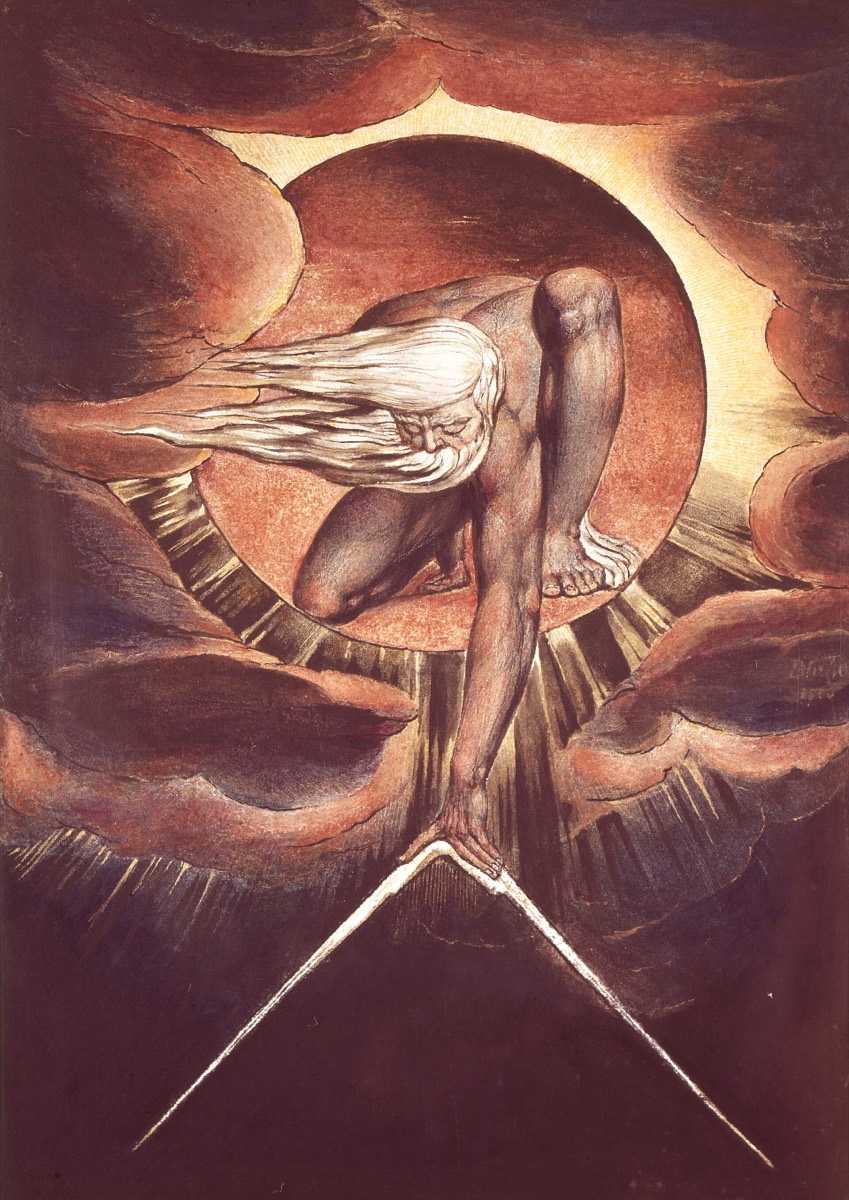
The Ancient of Days
Two centuries before LSD, Blake drew his visions directly — the compass of light, the burning orb, the wind of revelation.
William Blake, 1794 · photo Françoise Foliot · CC BY-SA 4.0 · Wikimedia Commons
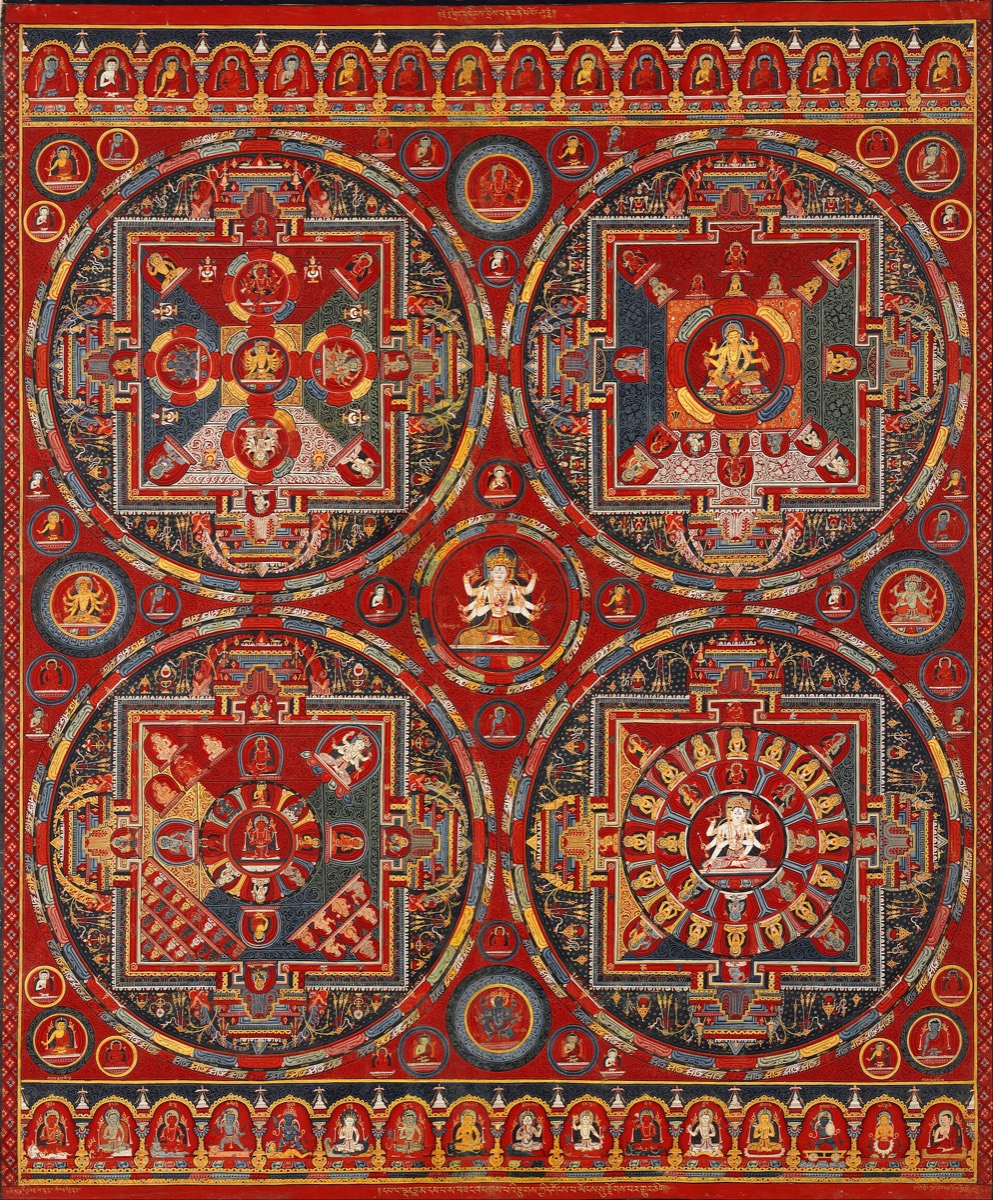
Four Mandalas
From Tibet to Eleusis, cultures that never met converge on concentric, radiant symmetry — a map of the divine mind.
Ngor Monastery, Tibet, 15th c. · Public domain · Wikimedia Commons
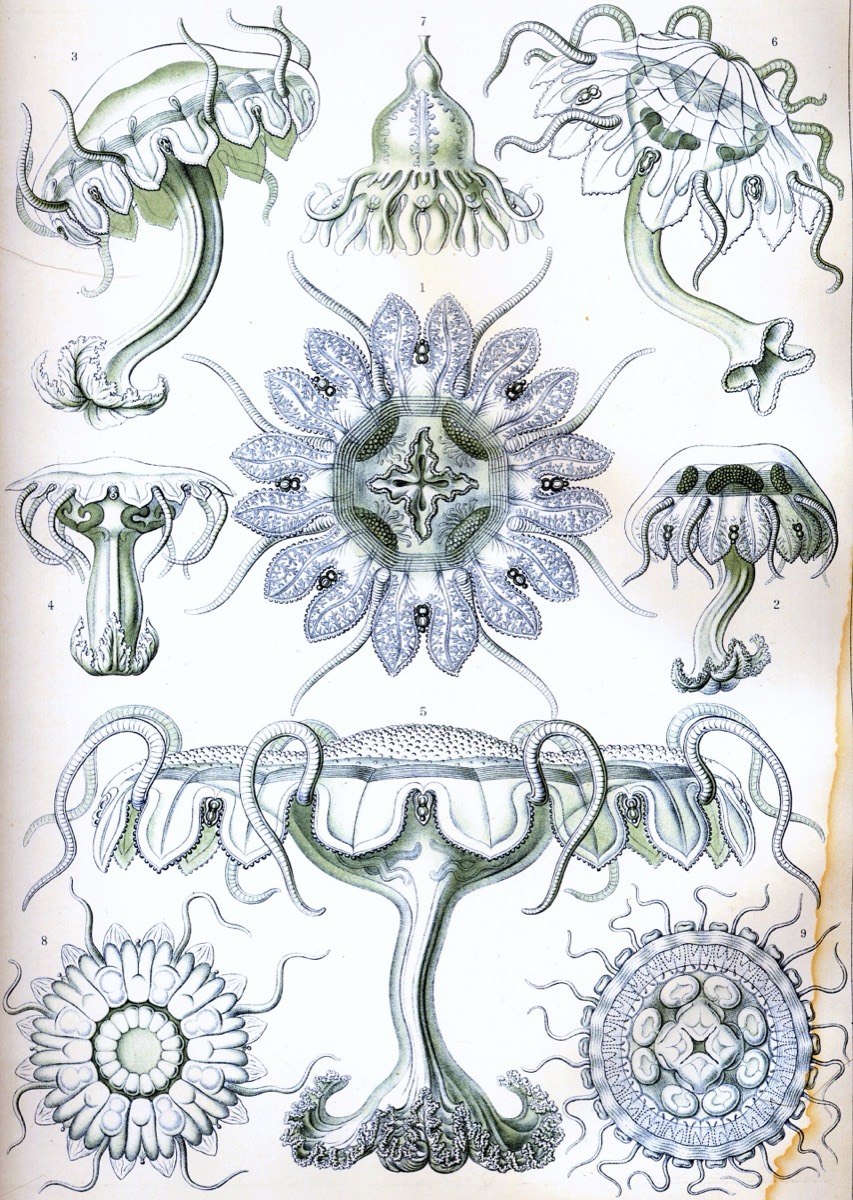
Discomedusae
Haeckel found the same mandalas in the sea. His radial jellyfish taught a century that geometry and life are one impulse.
Ernst Haeckel, Kunstformen der Natur, 1904 · Public domain · Wikimedia Commons
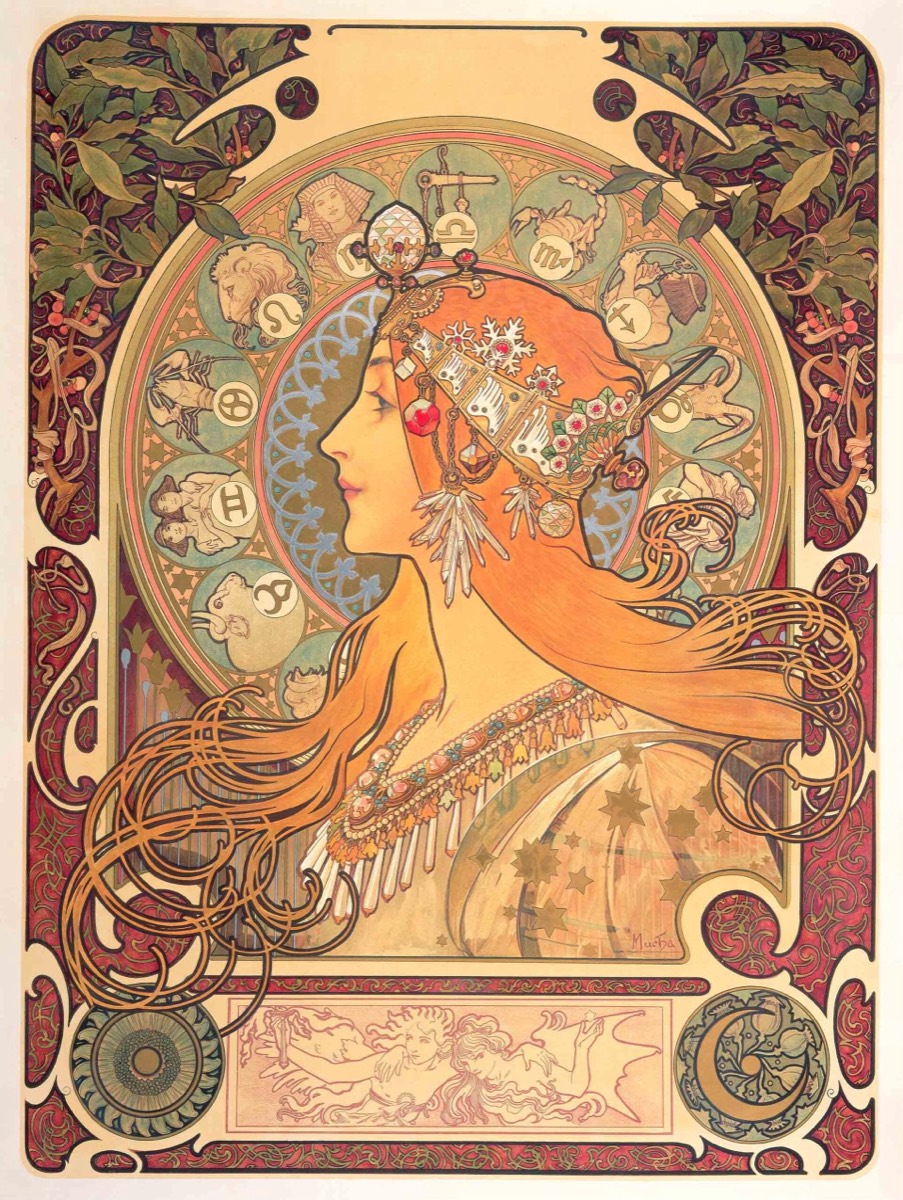
Zodiac
Mucha's haloed women and whiplash line are the direct forebears of the Fillmore poster. The Sixties simply turned up the saturation.
Alphonse Mucha, 1896 · Public domain · Wikimedia Commons
Reserved for the Licensed Edition
The two works this chapter is really about are still under copyright — so they get cleared, credited, and licensed, not borrowed. Final scans drop into these frames once rights are secured.
licensed scan to be placed
The Fillmore Poster
Wes Wilson and the Fillmore artists bent type until it breathed — Mucha's line turned up to a high-vibration roar.
© Wes Wilson / Bill Graham Archives — rights to be cleared for the published edition
licensed scan to be placed
The Perforated Sheet
LSD blotter became an accidental printmaking tradition — now collected, framed, and shown as miniature art.
© the respective artists (e.g. Institute of Illegal Images) — rights to be cleared
A note on what isn't shown: the most famous psychedelic art — the Fillmore concert posters and LSD blotter sheets — remains under living copyright, which is why this plate section reaches instead for their public-domain ancestors. Clearing those rights is a line item for the published edition.
Colophon · Resources · Disclaimer
If you need help right now
- Emergency: call your local emergency number. Overdose is survivable if help comes fast.
- DanceSafe — dancesafe.org · drug checking & peer education
- Never Use Alone (US) — 1-800-484-3731
- Fireside Project — psychedelic peer support · call/text 62-FIRESIDE
- 988 — US Suicide & Crisis Lifeline
- SAMHSA — 1-800-662-HELP · free, confidential, 24/7 treatment referral
Stewardship & sources
Built in the spirit of the people who told the truth first: DanceSafe, MAPS, Erowid, the Drug Policy Alliance, Hopkins & NYU psychedelic research, David Nutt, Norman Zinberg, and Raphael Mechoulam. The molecular plates are standard textbook structures shown as scientific history.
The Library — Further Reading & Research
On the shelf
- The Psychedelic Handbook — Rick Strassman
- The Psychedelic Experience — Leary, Metzner & Alpert
- Breaking Convention: Psychedelic Pharmacology
- Psychedelic Mystery Traditions — Thomas Hatsis
- Drugs Without the Hot Air — David Nutt
- PiHKAL / TiHKAL — Alexander & Ann Shulgin
- How to Change Your Mind — Michael Pollan
- The DoubleBlind Guide to Psychedelics — Hartman & Margolin
Shelf seeded from the psychedelic-books section at THC-SF · thc-sf.com
Research & harm reduction
- MAPS — maps.org · MDMA-assisted therapy
- Johns Hopkins Center for Psychedelic & Consciousness Research
- Imperial College Centre for Psychedelic Research
- Beckley Foundation · Heffter Research Institute
- Erowid — erowid.org · the experience archive
- DanceSafe · Fireside Project · TripSit · PsychonautWiki
- Drug Policy Alliance — drugpolicy.org
Peer-reviewed work lives on PubMed, JAMA, Nature & Science.
Disclaimer
This is a proof-of-concept artifact created for a concept meeting. It is a work of culture, science, history, and harm-reduction education. It is not medical or legal advice and it is not an endorsement of illegal activity. It deliberately contains no dosing information, no preparation methods, and no instructions for combining substances. If you or someone you love is struggling with substance use, please contact a medical professional or one of the services above.
Choose life. Stay curious.
The Coffee Table Book · First Edition · A Proof of Concept · MMXXVI